

For landlords and property managers, vaping has become one of the most misunderstood tenant issues of the decade. Unlike traditional cigarette smoking — which is widely banned and clearly understood — e-cigarettes and vaping devices occupy a legal gray area that leaves many landlords exposed without even realizing it.
A lease that says "no smoking" may offer no protection against a vaping tenant. Courts have sided with tenants on precisely this point. Meanwhile, the residue, the health liability, and the HVAC damage from indoor vaping are very real.
Quick Summary: E-cigarettes and vaping devices — also called vapes, vape pens, and ENDS — pose documented risks to rental properties through sticky chemical residue, HVAC contamination, and odors left behind. Landlords have the legal right to ban vaping, but only if lease language explicitly covers it. This guide covers the health science, property impact, and step-by-step lease language landlords need in 2026.
What Are E-Cigarettes and Vapes?
E-cigarettes — also commonly known as vapes, vape pens, e-cigs, and electronic nicotine delivery systems (ENDS) — are battery-operated devices that heat a liquid to produce an inhalable aerosol. According to the CDC, most e-cigarettes contain nicotine, and as of June 2024, nearly 6,300 different e-cigarette products are available for purchase in the United States. They come in many shapes and sizes, from products that resemble traditional cigarettes to USB drive-style devices, pens, and disposable pods.
The term "e-cigarette" is technically accurate but increasingly dated. In everyday use, "vaping" and "vapes" have become the dominant terms — particularly among younger users. For landlords and property managers, this terminology shift has direct legal implications: a lease that only prohibits "smoking" or "e-cigarettes" may not legally cover all the device names a tenant might use to argue their habit is not restricted.
Are E-Cigarettes and Vaping Safe? What the Science Says
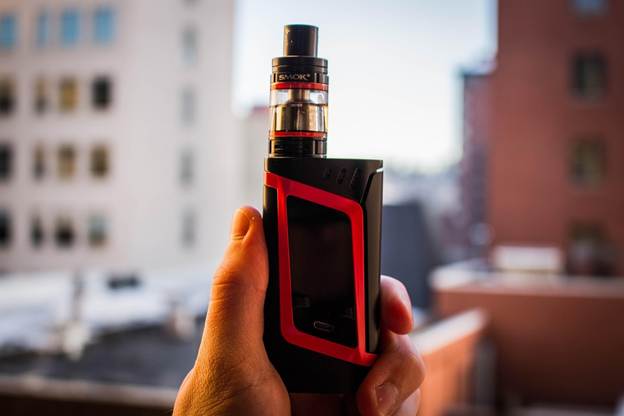
Because vaping devices do not burn tobacco, they do not produce tar in the traditional sense. This has led to widespread misconceptions that vaping is harmless — a claim health authorities consistently reject.
According to the American Nonsmokers' Rights Foundation, exhaled e-cigarette aerosol contains nicotine, ultrafine particles, volatile organic compounds, and FDA-confirmed carcinogenic tobacco-specific nitrosamines. Research published by the National Institutes of Health identifies significant levels of toxic carbonyls in e-cigarette vapor, including formaldehyde, acetaldehyde, and acrolein.
Peer-reviewed research further documents that secondhand e-cigarette aerosol contains at least ten chemicals on California's Proposition 65 list of substances known to cause cancer, birth defects, or other reproductive harm — including acetaldehyde, benzene, cadmium, formaldehyde, isoprene, lead, nickel, nicotine, N-Nitrosonornicotine, and toluene.
Key takeaway for landlords: While vaping produces fewer chemicals overall than traditional cigarettes, "fewer" does not mean "safe." Secondhand aerosol poses documented health risks to other occupants, including those with respiratory conditions.
FDA Regulation of E-Cigarettes: What Landlords Should Know
E-cigarettes are federally regulated. In May 2016, the FDA finalized the Deeming Rule, effective August 8, 2016, which extended the agency's authority to all tobacco products not previously covered by the Federal Food, Drug, and Cosmetic Act — including all electronic nicotine delivery systems (ENDS). Under this rule, e-cigarette manufacturers must disclose ingredients, obtain FDA premarket authorization, and are prohibited from making unsubstantiated health claims.
Federal regulation of vaping products is ongoing and evolving. Landlords who stay informed about FDA actions will be better positioned to update lease language and policies as new product categories emerge.
How Does Vaping Damage Rental Property?
This is one of the most practical questions for property owners. The damage profile from vaping differs from traditional cigarette smoking, but it is real and can be costly.
1. Sticky Chemical Residue
Vaping aerosol contains propylene glycol and vegetable glycerin that do not simply evaporate indoors. According to Zeptive Property Management, these compounds create a sticky, oily film that clings to walls, ceilings, windows, carpets, and HVAC components. Standard paint will not adhere to this residue without deep solvent cleaning and specialized stain-blocking primer, significantly increasing unit turnover costs.
2. HVAC System Contamination
Vaping residue enters an HVAC system and can damage the entire system of ductwork. Research has found that e-cigarette chemicals left in a closed environment can move through air vents and contaminate the entire system.
3. Property Value Impact
A survey of 750 adults conducted by The Domo Group and RE/MAX, reported by The Mortgage Reports, found that more than 42% said regular indoor vaping would negatively affect their perception of a home's value. For landlords preparing a unit for re-lease, this perception translates directly into longer vacancy periods and potential price reductions.
Vaping vs. Traditional Cigarette Smoke: How They Compare
The damage from vaping is generally less severe than from traditional tobacco smoking. Vaping residue is unlikely to seep into drywall or create the deep nicotine staining associated with heavy tobacco use. However, prolonged heavy vaping indoors does accumulate meaningfully, particularly in poorly ventilated spaces.
Can a Landlord Legally Ban Vaping? Yes — Here's How
Landlords have the legal right to prohibit vaping on their properties. Vaping is not a protected activity under any fair housing law. However, the enforceability of a vaping ban depends entirely on the language in the lease agreement.

Why Generic "No Smoking" Clauses May Not Be Enough
Courts have sometimes interpreted "smoking" in its traditional, combustion-based sense. In a documented Massachusetts case reported by MassLandlords.net, a property management company lost its eviction case because the judge did not credit testimony that she could distinguish cigarette smoke from vaping. The company's lease did not explicitly cover vaping — and they lost.
Recommended Lease Language
A well-drafted no-smoking/no-vaping clause should explicitly prohibit all of the following:
- E-cigarettes and electronic cigarettes
- Vapes, vape pens, and vaporizers
- E-cigs, mods, and tank systems
- Any electronic nicotine delivery system (ENDS)
- Any device that produces an inhalable aerosol or vapor
- Use of any of the above substances in any form, regardless of what it is called
This explicit language creates a solid legal foundation for issuing warnings, levying fines, and, if necessary, pursuing eviction for violations. For additional lease drafting resources, contact an attorney that specializes in Landlord/Tenant law.
Frequently Asked Questions: Vaping in Rental Properties
Can a landlord prohibit vaping inside a rental unit?
Yes. Landlords have the legal right to prohibit vaping in rental units through lease agreements. Vaping is not protected under any fair housing law. However, the lease must explicitly name e-cigarettes, vapes, vape pens, and electronic nicotine delivery systems (ENDS) — not just "smoking" — to be enforceable in court.
Does vaping damage rental property?
Yes. Vaping produces a sticky aerosol containing propylene glycol and vegetable glycerin that leaves an oily residue on walls, ceilings, carpets, and HVAC systems. While the damage is generally less severe than traditional cigarette smoke, prolonged indoor vaping can necessitate professional cleaning, specialized primer before repainting, and HVAC servicing. Studies show indoor vaping can also negatively affect a property's perceived value.
Is vaping covered under a "no smoking" lease clause?
Not necessarily. Courts have ruled in favor of tenants when lease language only referenced "smoking," because vaping does not involve combustion in the traditional sense. Landlords should update lease language to explicitly list all device types and include the phrase "any device that produces an inhalable aerosol or vapor."
What is the difference between vaping and e-cigarettes?
The terms are often used interchangeably. Technically, "e-cigarette" refers to the device and "vaping" refers to the act of using it. Both describe the same category of product: battery-operated electronic nicotine delivery systems (ENDS) that heat liquid to produce an aerosol. The CDC and most health agencies now use both terms together.
Are e-cigarettes regulated by the FDA?
Yes. Since August 8, 2016, the FDA's Deeming Rule has regulated e-cigarettes and all electronic nicotine delivery systems (ENDS) as tobacco products under the Federal Food, Drug, and Cosmetic Act. Manufacturers must disclose ingredients and obtain premarket authorization.
Is secondhand vaping dangerous to other occupants?
Yes. Secondhand e-cigarette aerosol is not simply water vapor. It contains nicotine, ultrafine particles, carcinogenic nitrosamines, formaldehyde, benzene, and heavy metals including lead and nickel.
What Landlords Should Do Right Now
Given the evolving legal landscape and the documented health and property risks associated with indoor vaping, the most defensible approach for landlords is the most conservative one. Here are five steps to take today:
- Update your lease immediately. Add explicit language covering all ENDS device types, not just "smoking."
- Check local ordinances. More than 1,086 municipalities now restrict vaping in smoke-free venues. Know what your local law requires.
- Document everything. If a tenant is vaping indoors, document it with written notices and inspection records. Verbal warnings are difficult to enforce.
The regulatory and legal landscape is moving in one clear direction: treating e-cigarettes and vaping devices the same as traditional tobacco products. Landlords who update their lease language and policies now will be better protected when disputes arise.